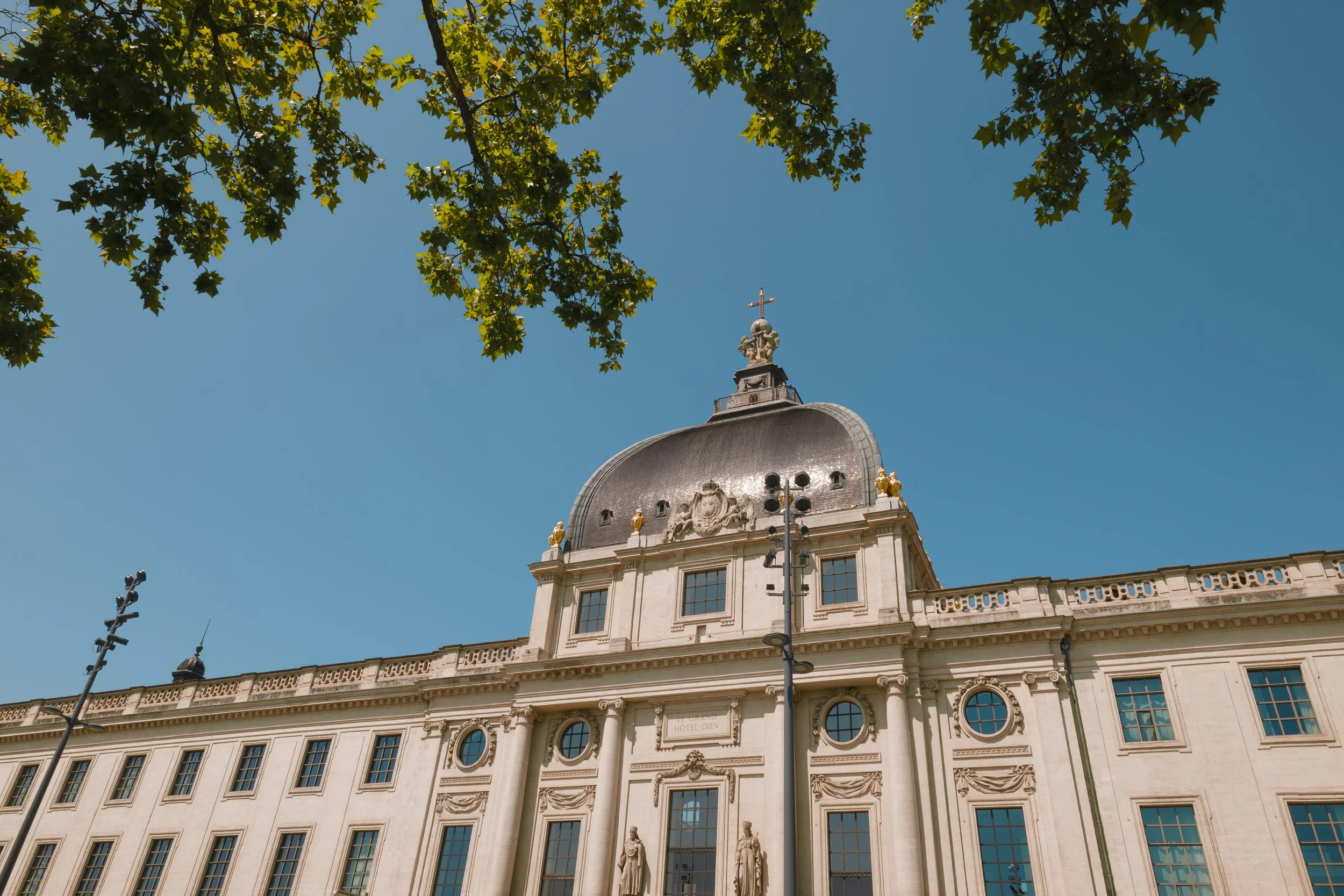
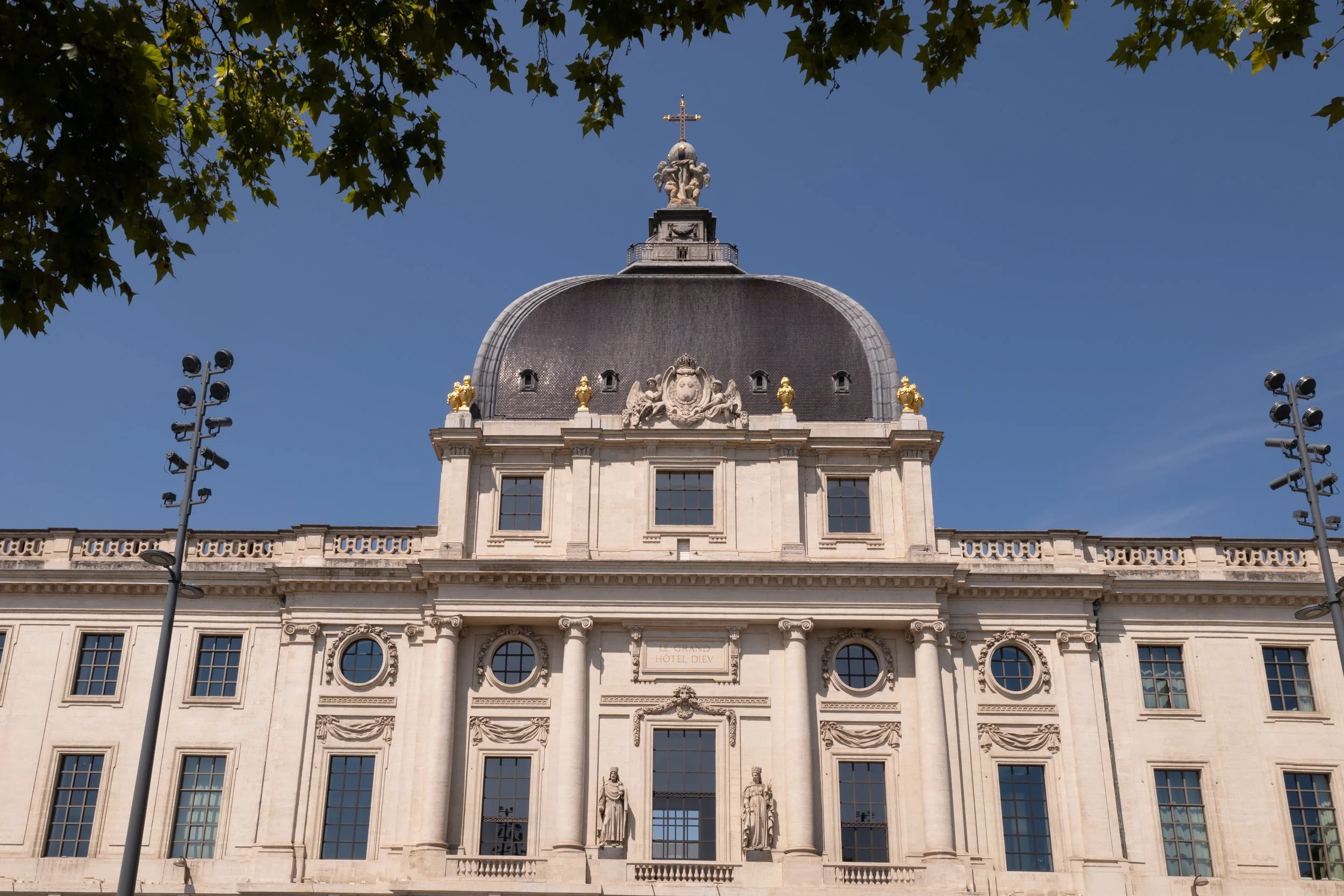
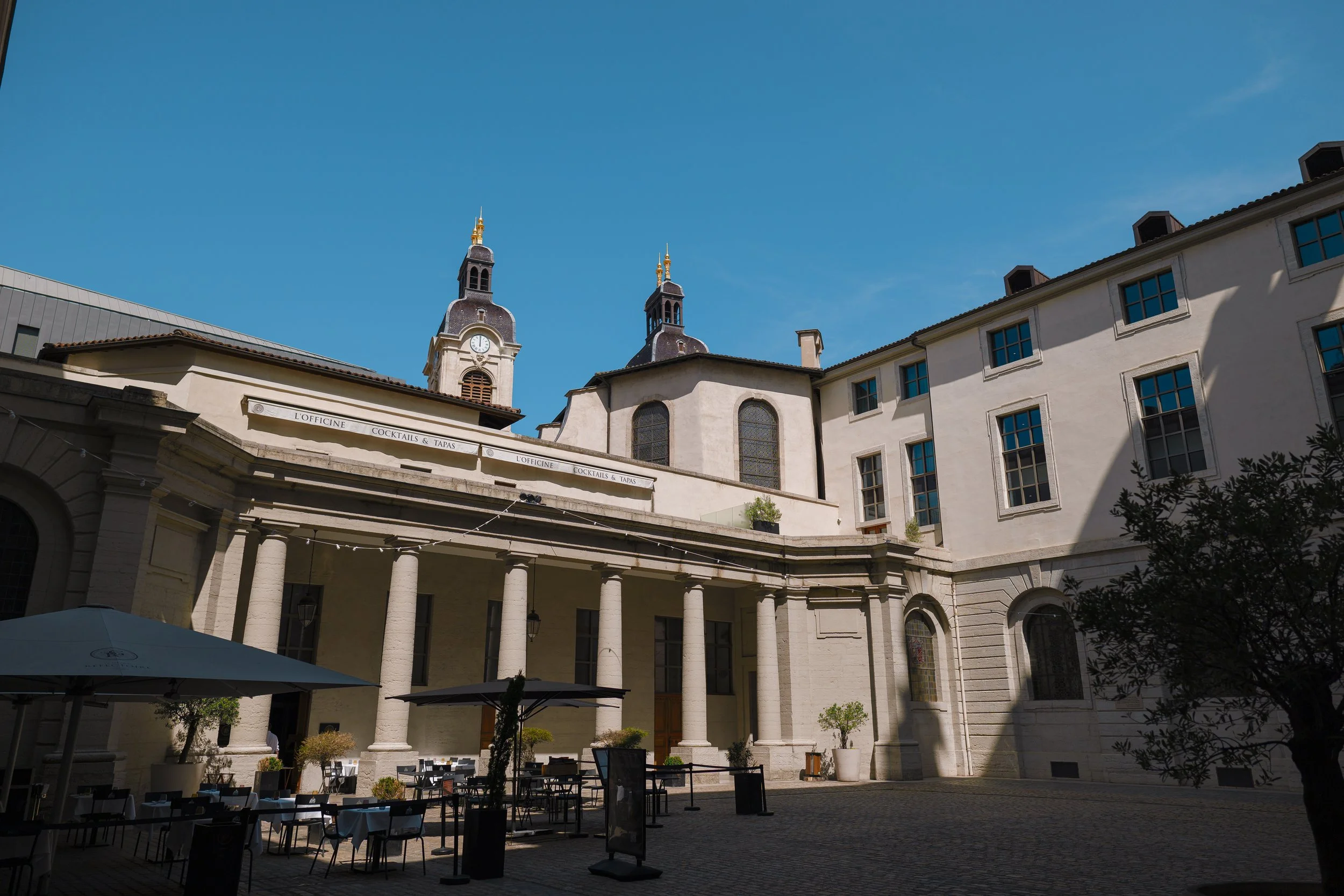
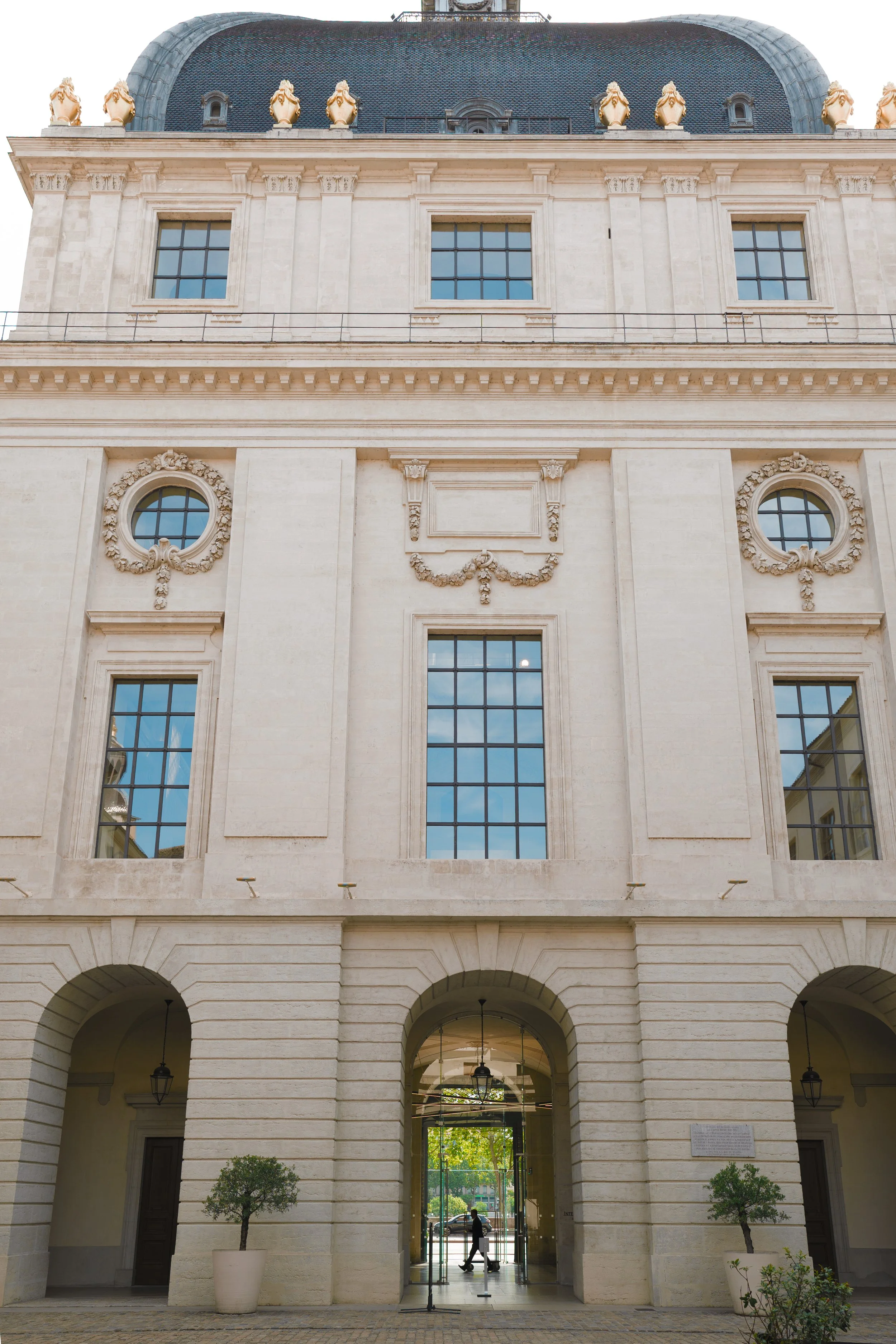
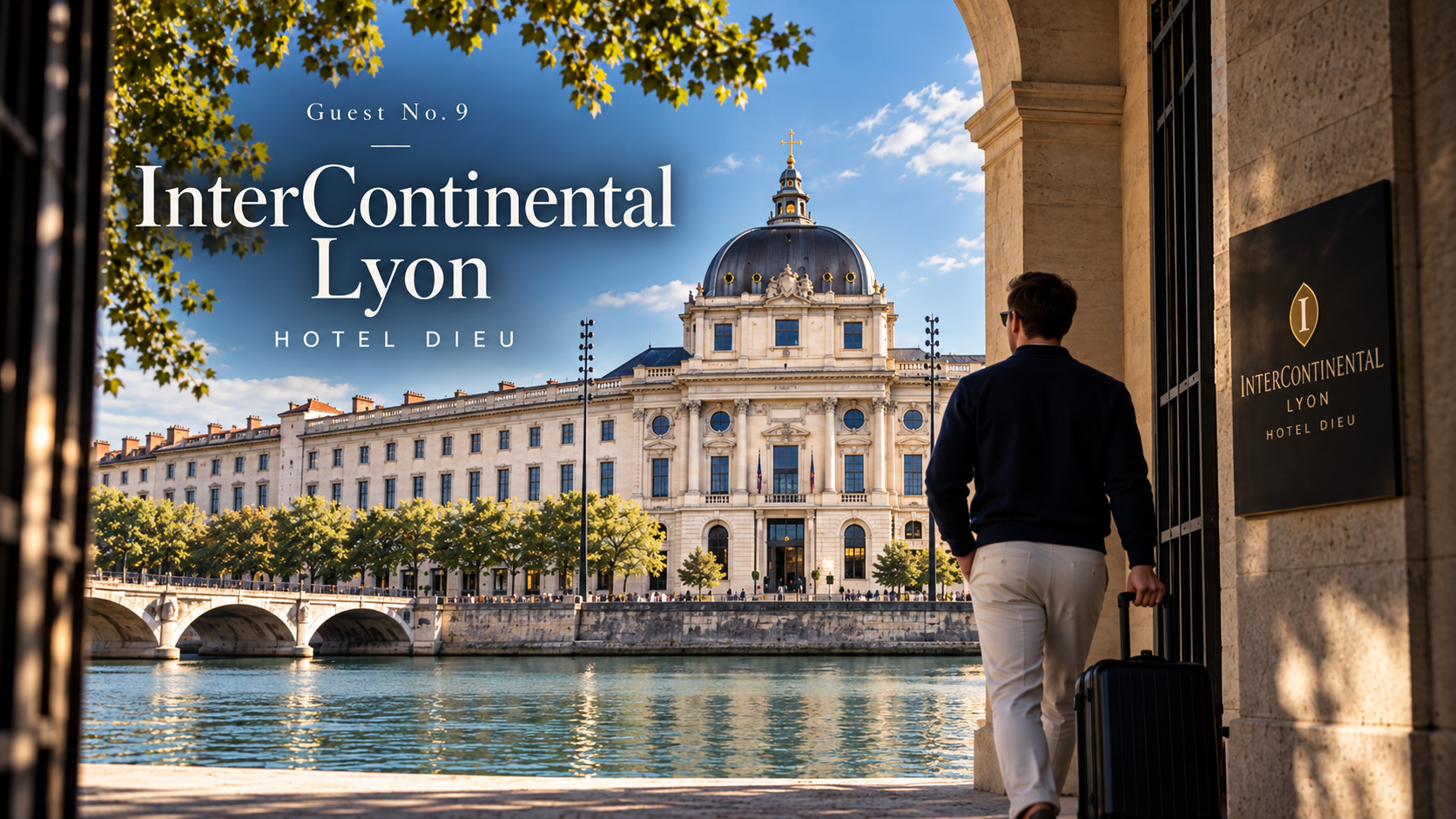
The Grand Hôtel-Dieu still stretches along the Rhône, long, pale and perfectly composed. Soufflot gave it its great classical façade: repetition, symmetry, tall arched windows and a dome that breaks the horizontal line almost theatrically. He never lived to see it completed.
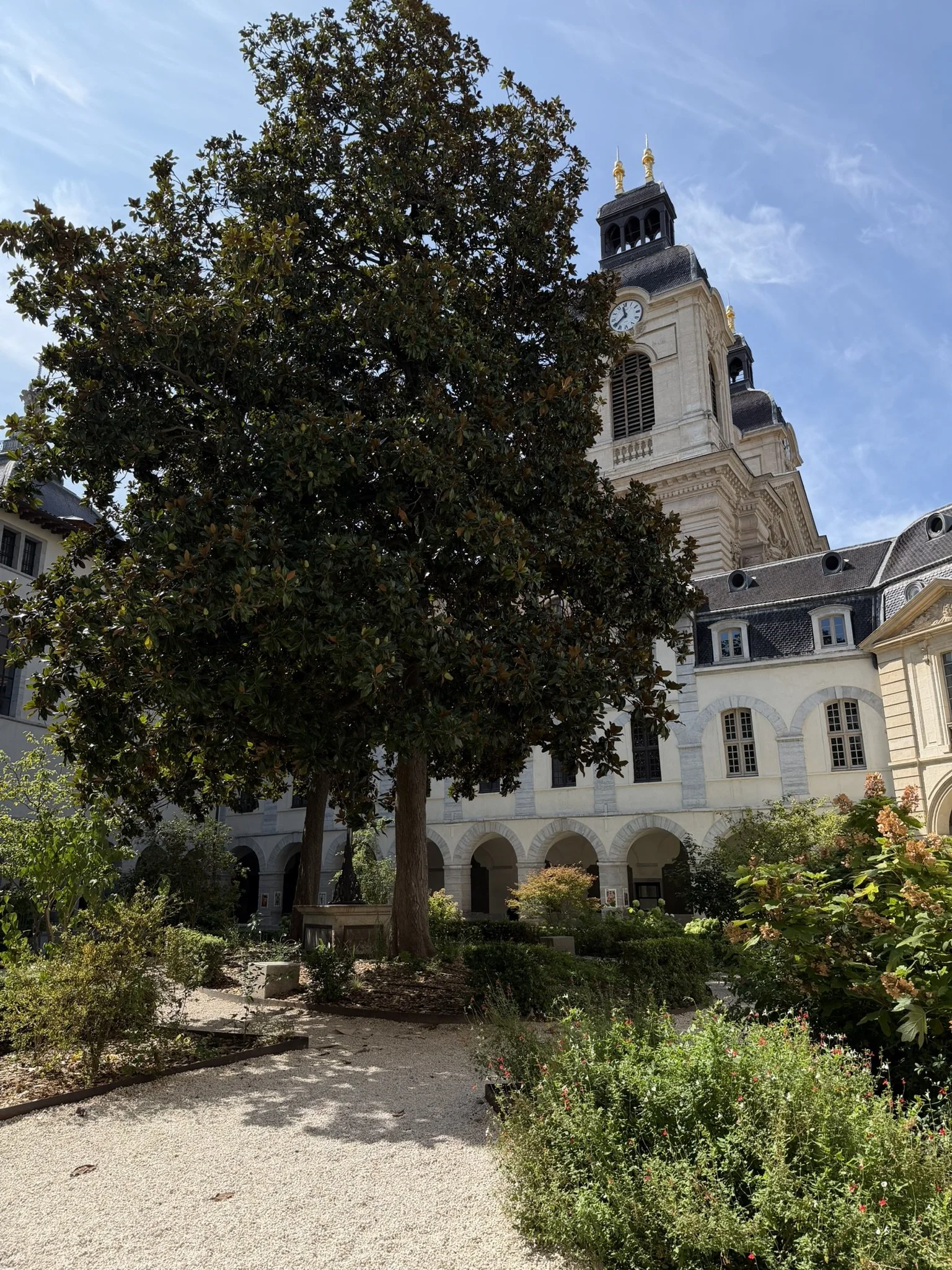
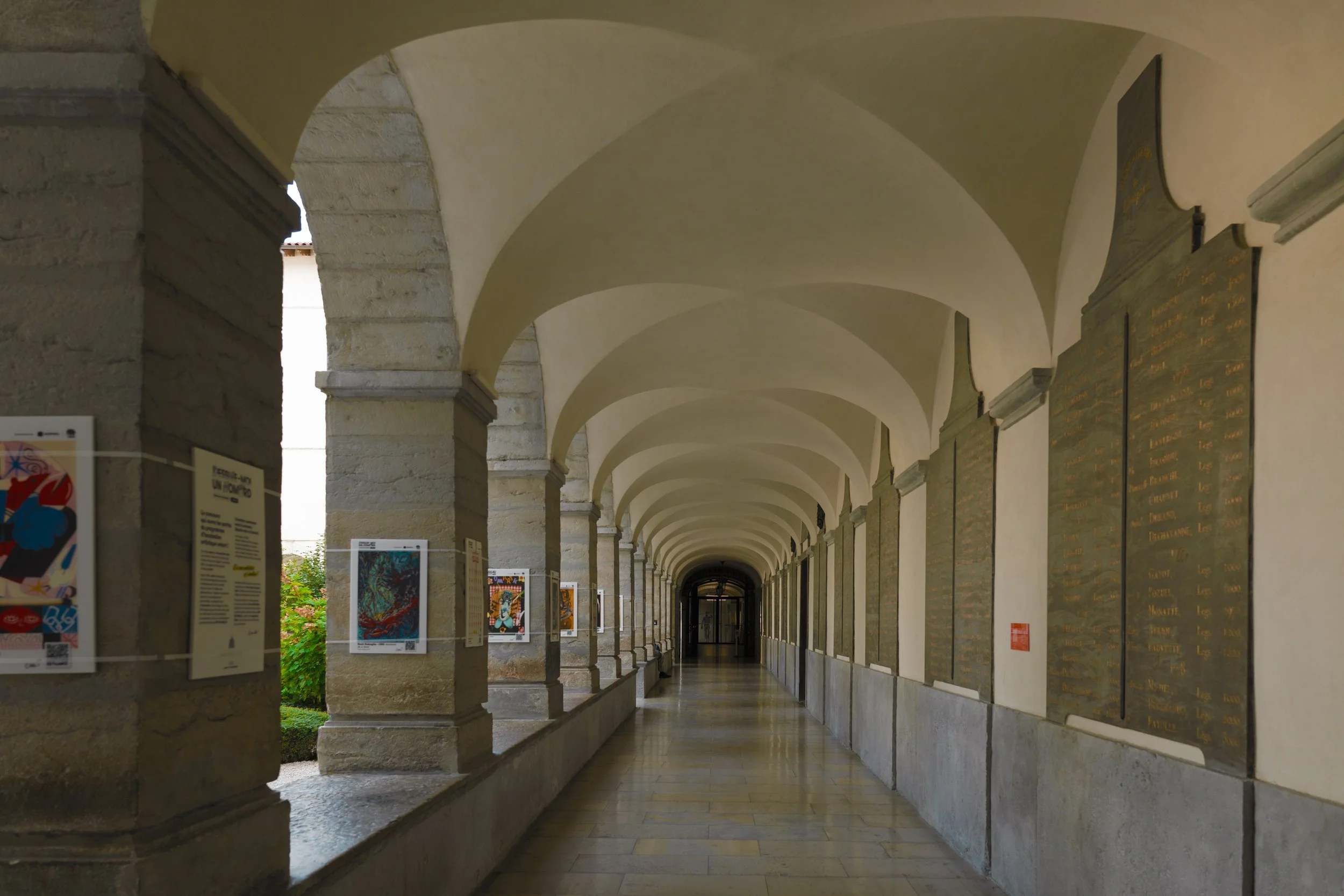
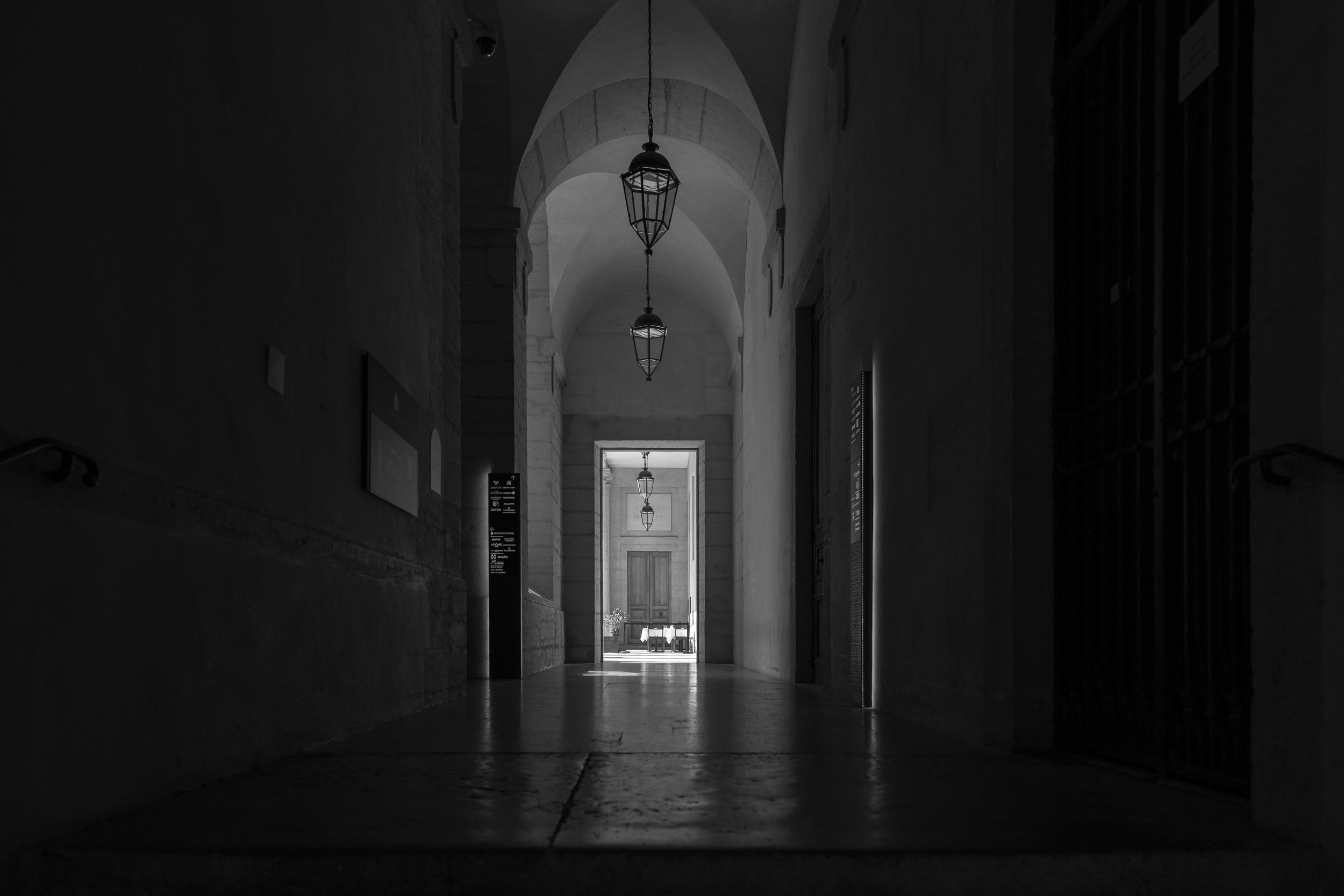
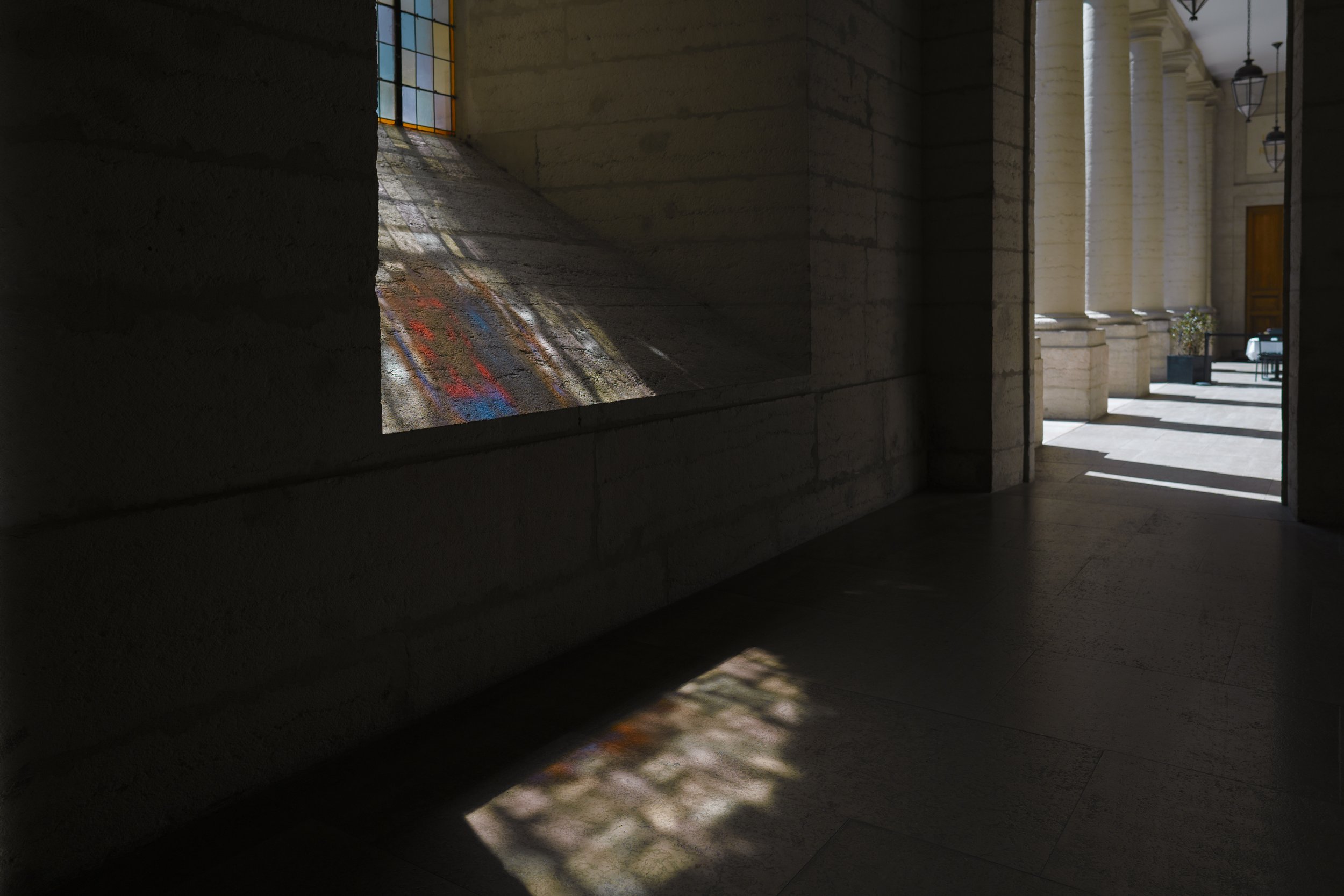
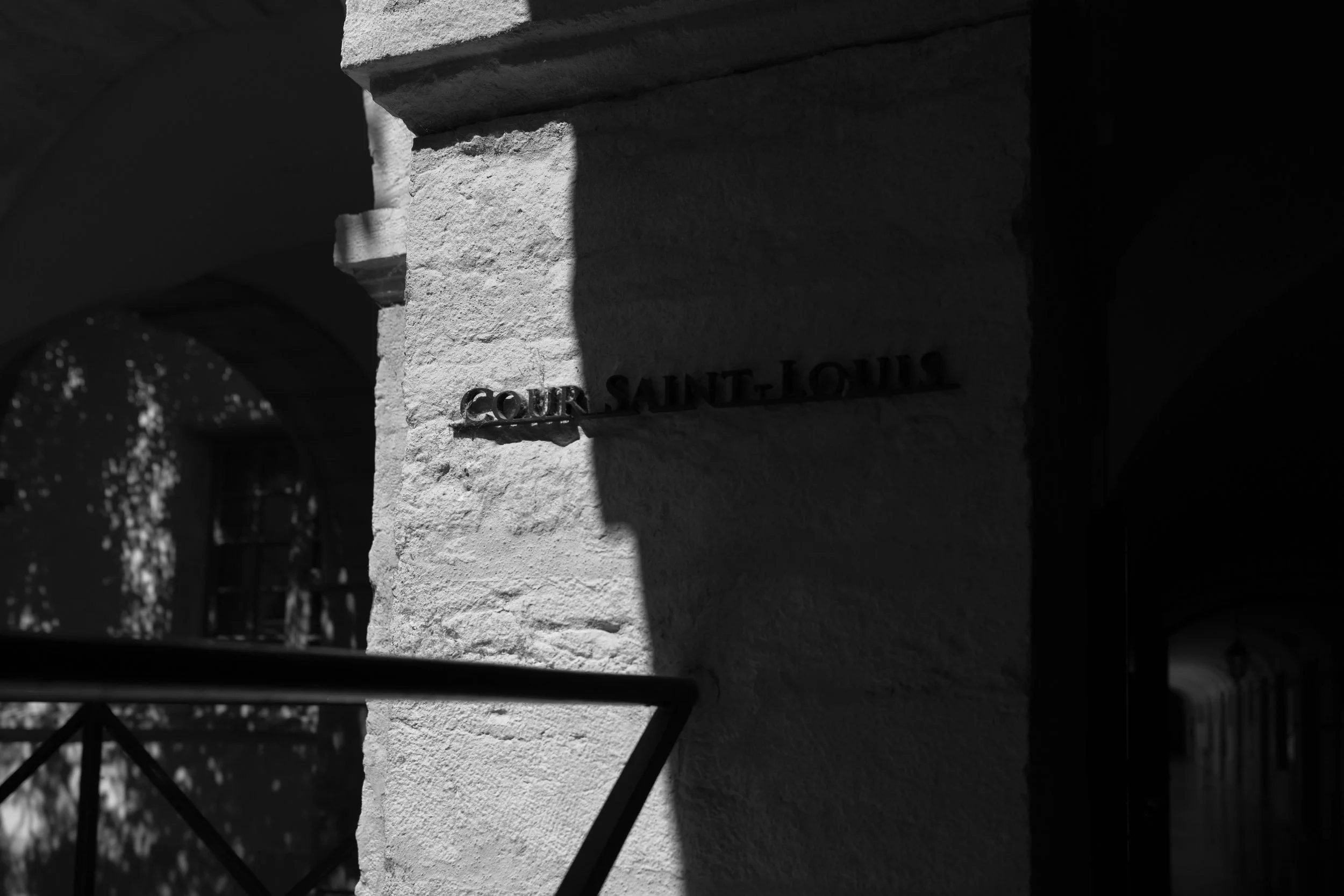
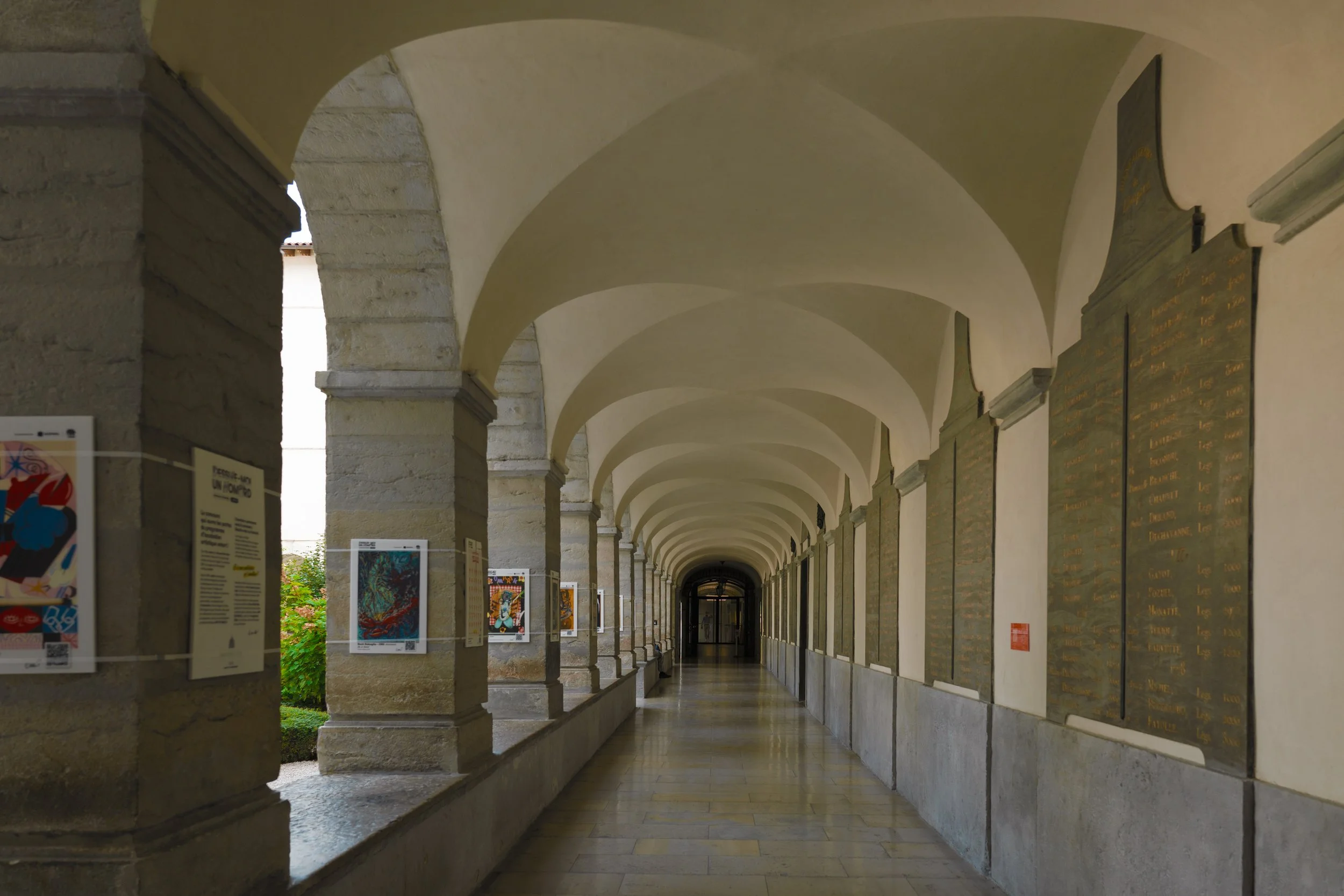
Up close, the scale is softened by the detail. Cut stone, deep window reveals, vaulted passages and courtyards arranged with an almost monastic order. Inside, the old cloister survives in fragments: gravel underfoot, magnolia trees, arcades, the clock keeping time above it all.
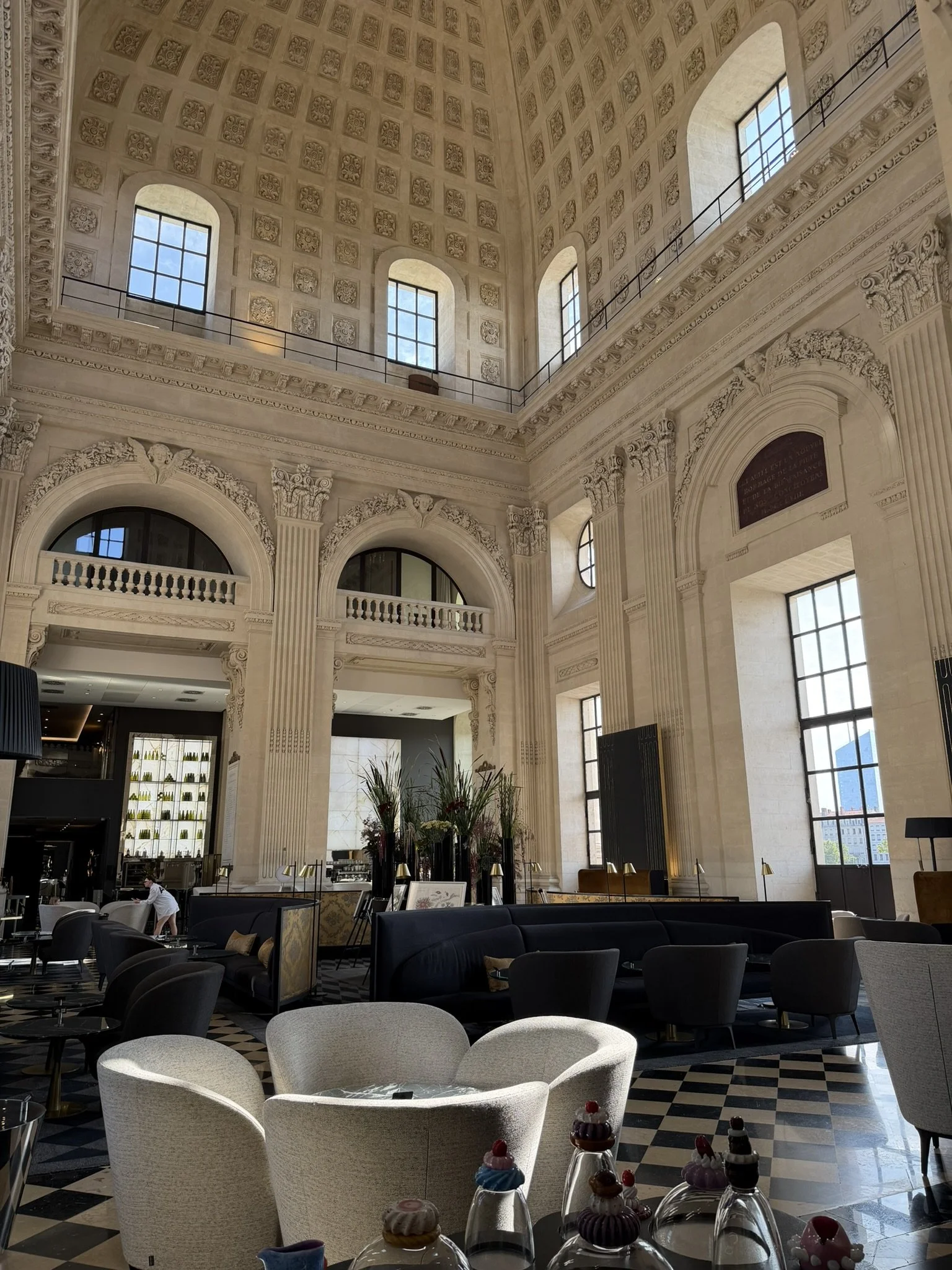
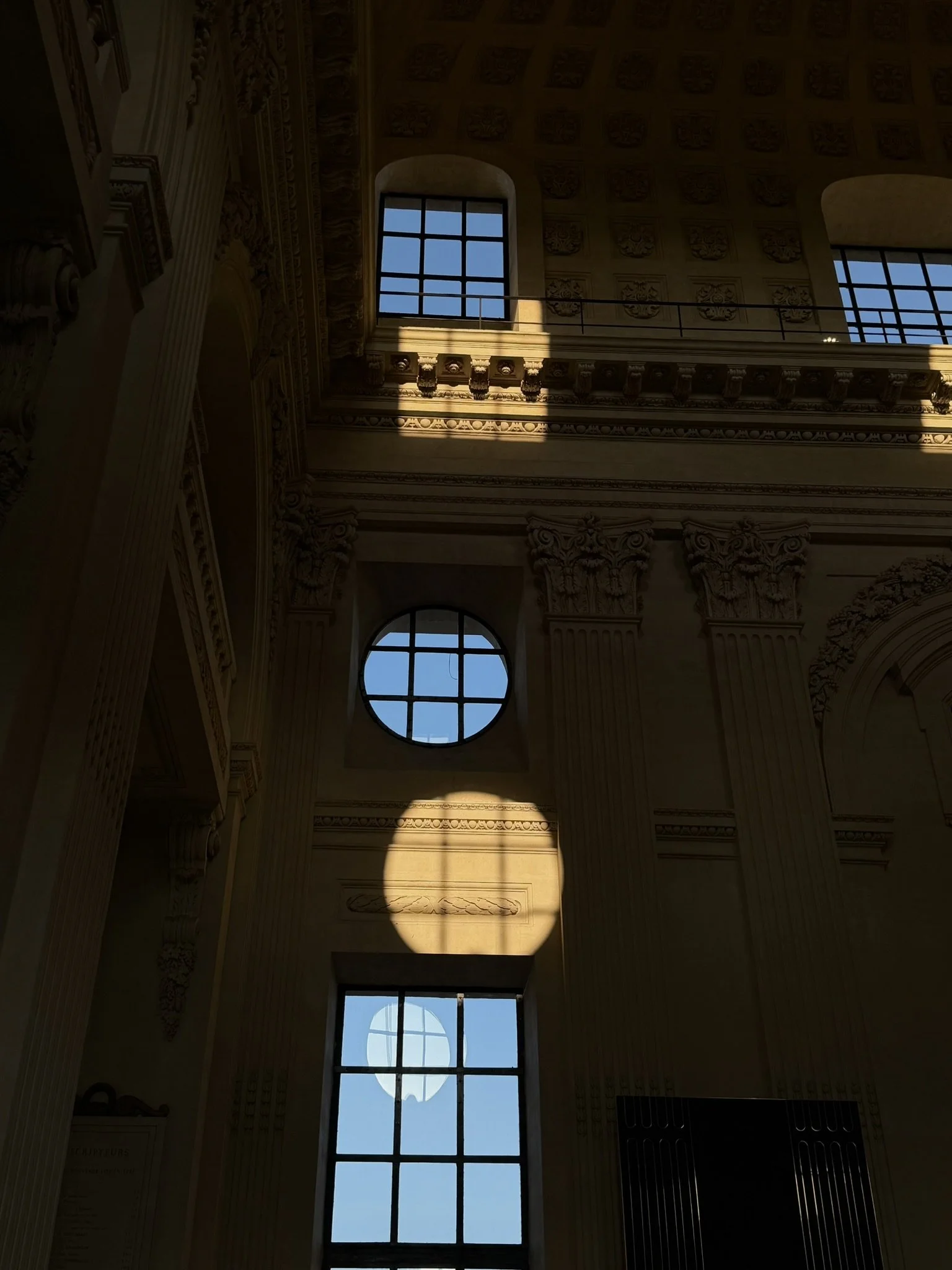
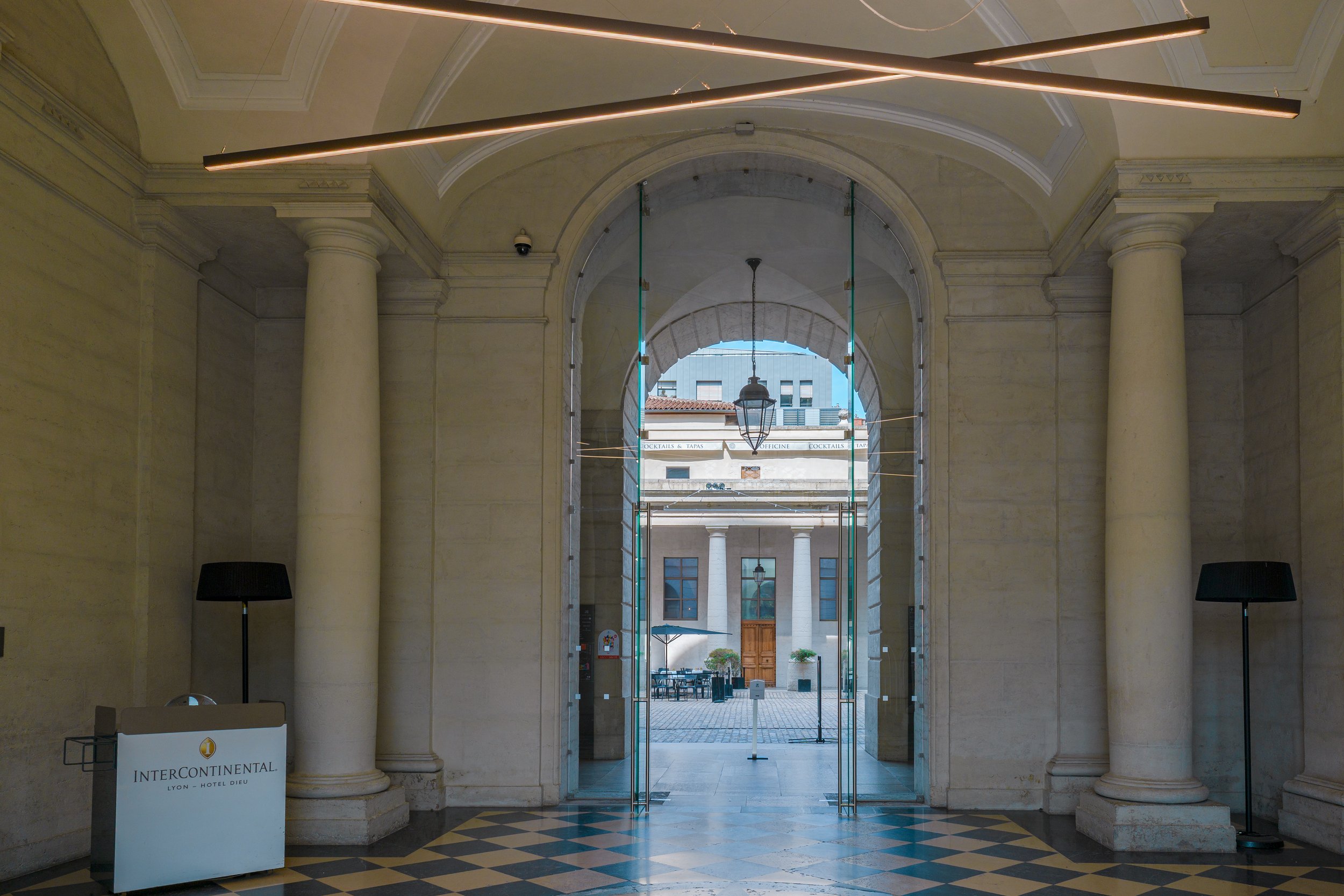
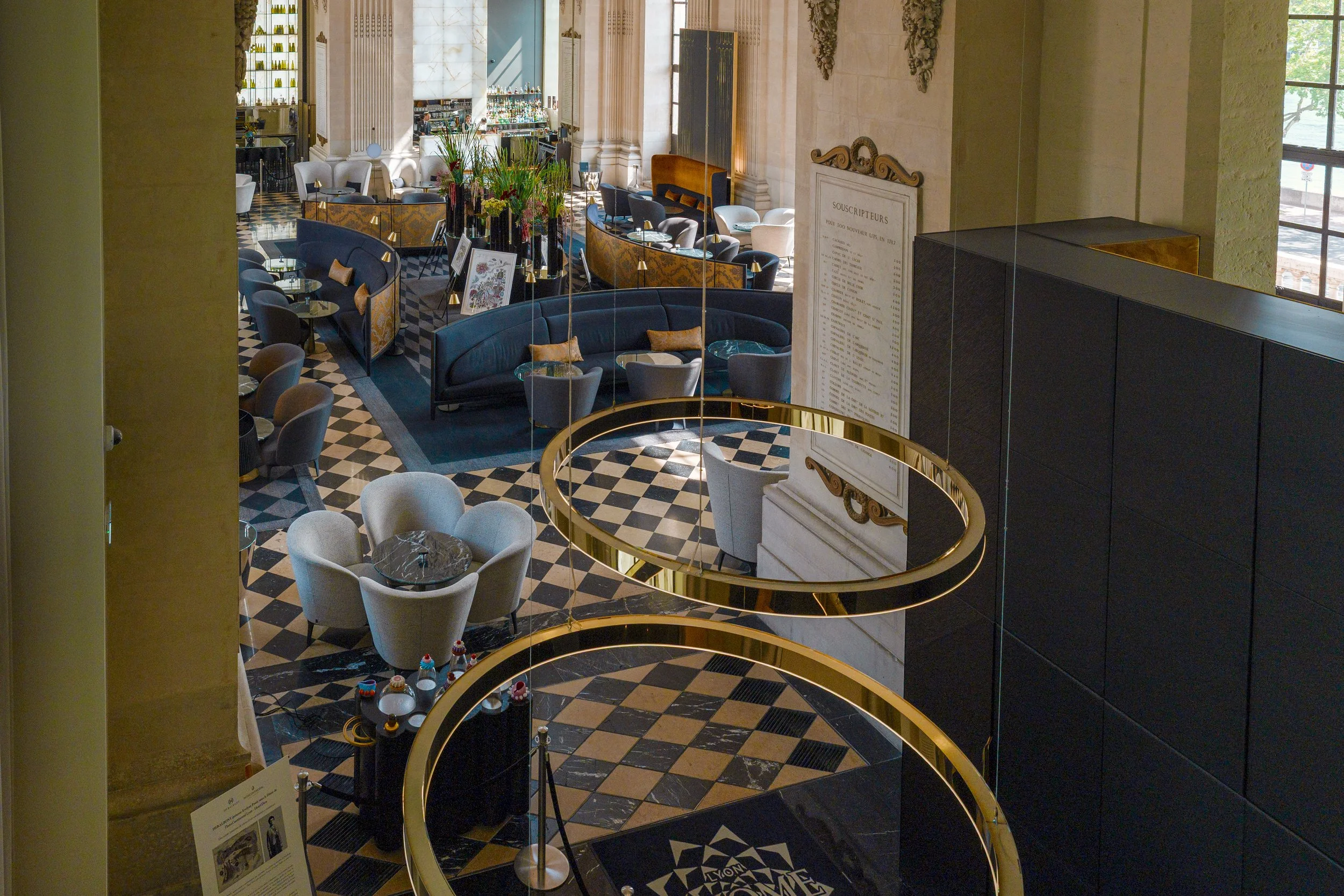
Le Dôme was once the chapel. Stone walls, coffered ceilings, a checkerboard floor and a geometry that pulls your eye upward. At the right hour, almost nobody. Light falls through the oculus and moves slowly across the curve of the dome and onto the wall.
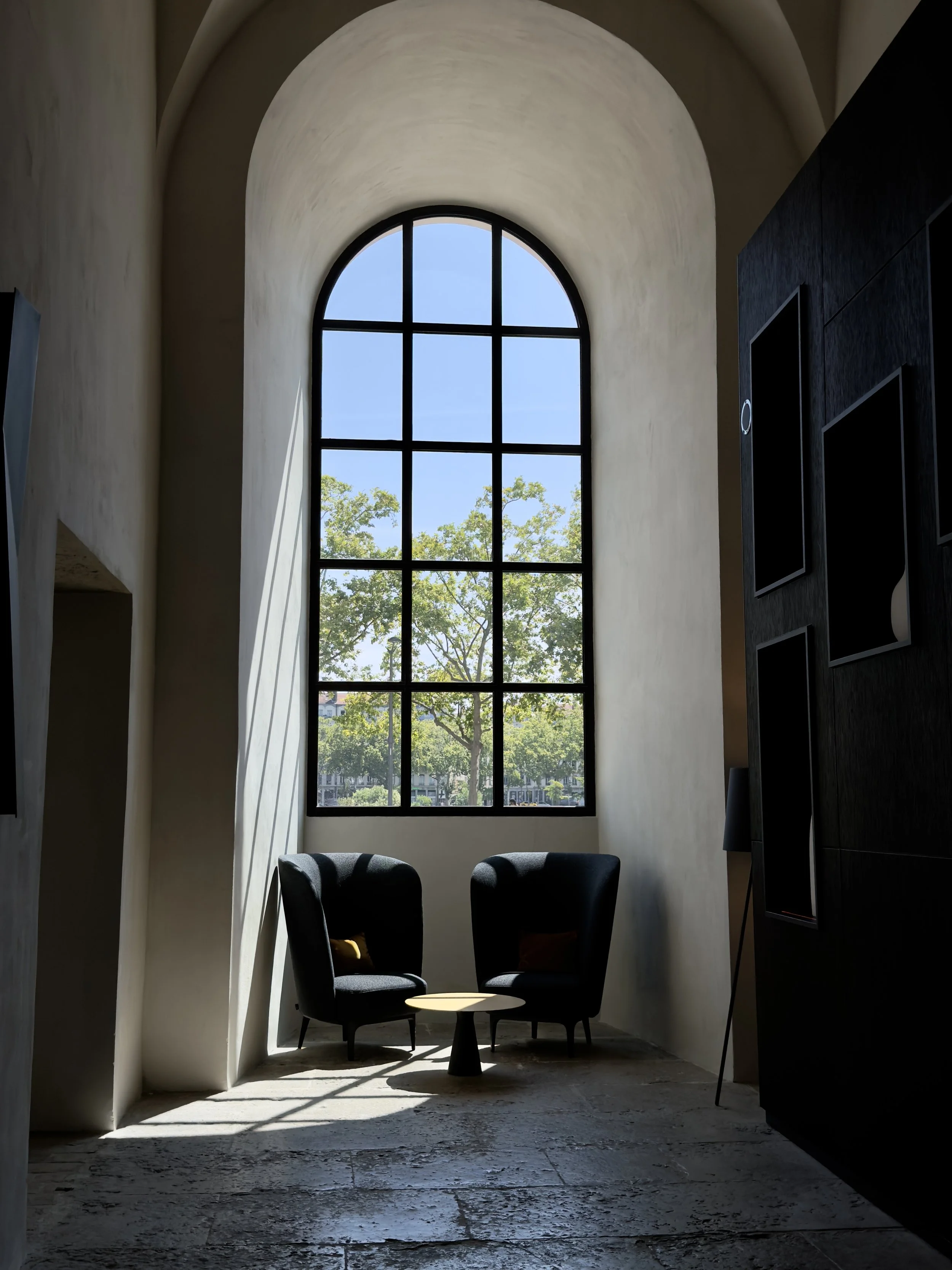
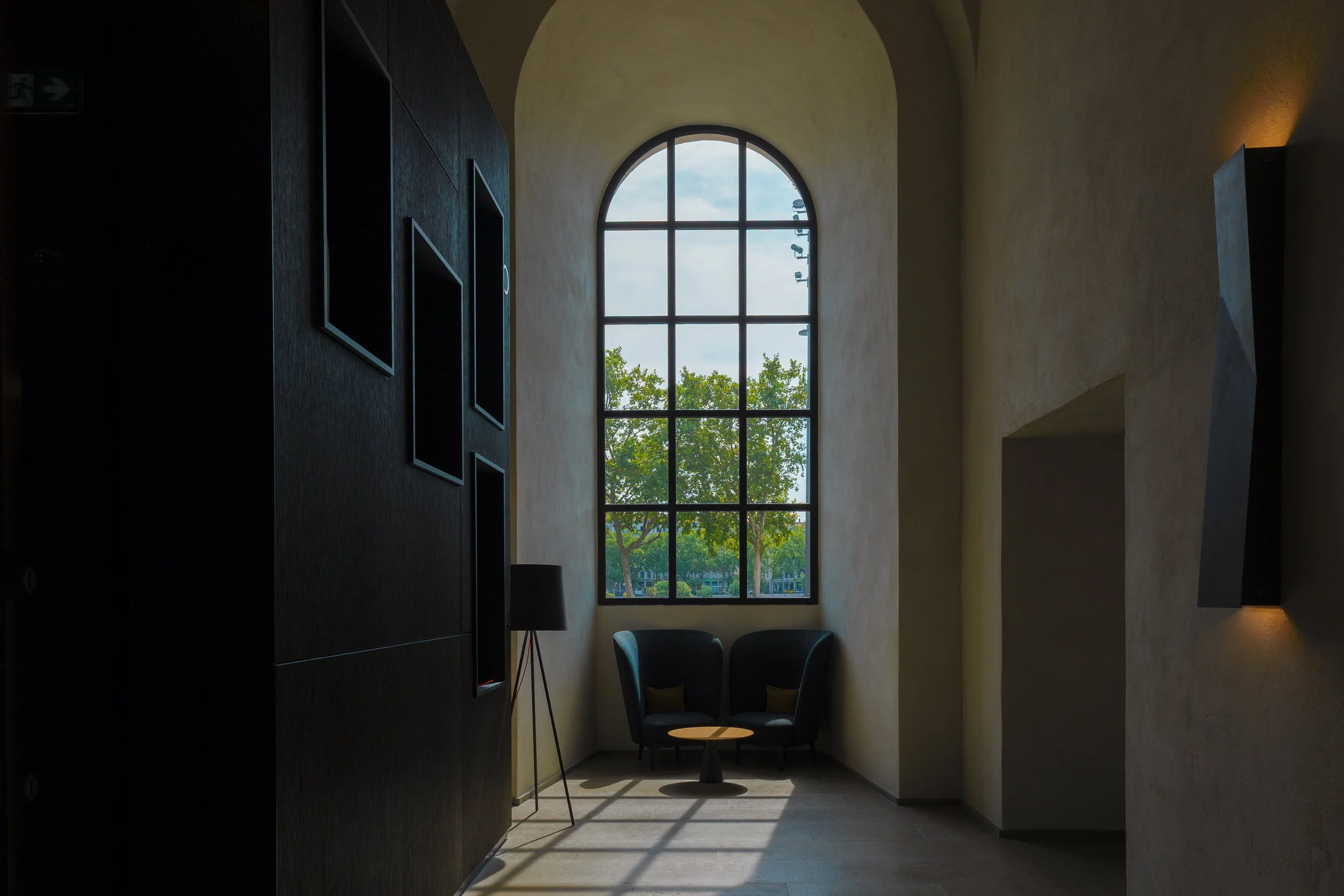
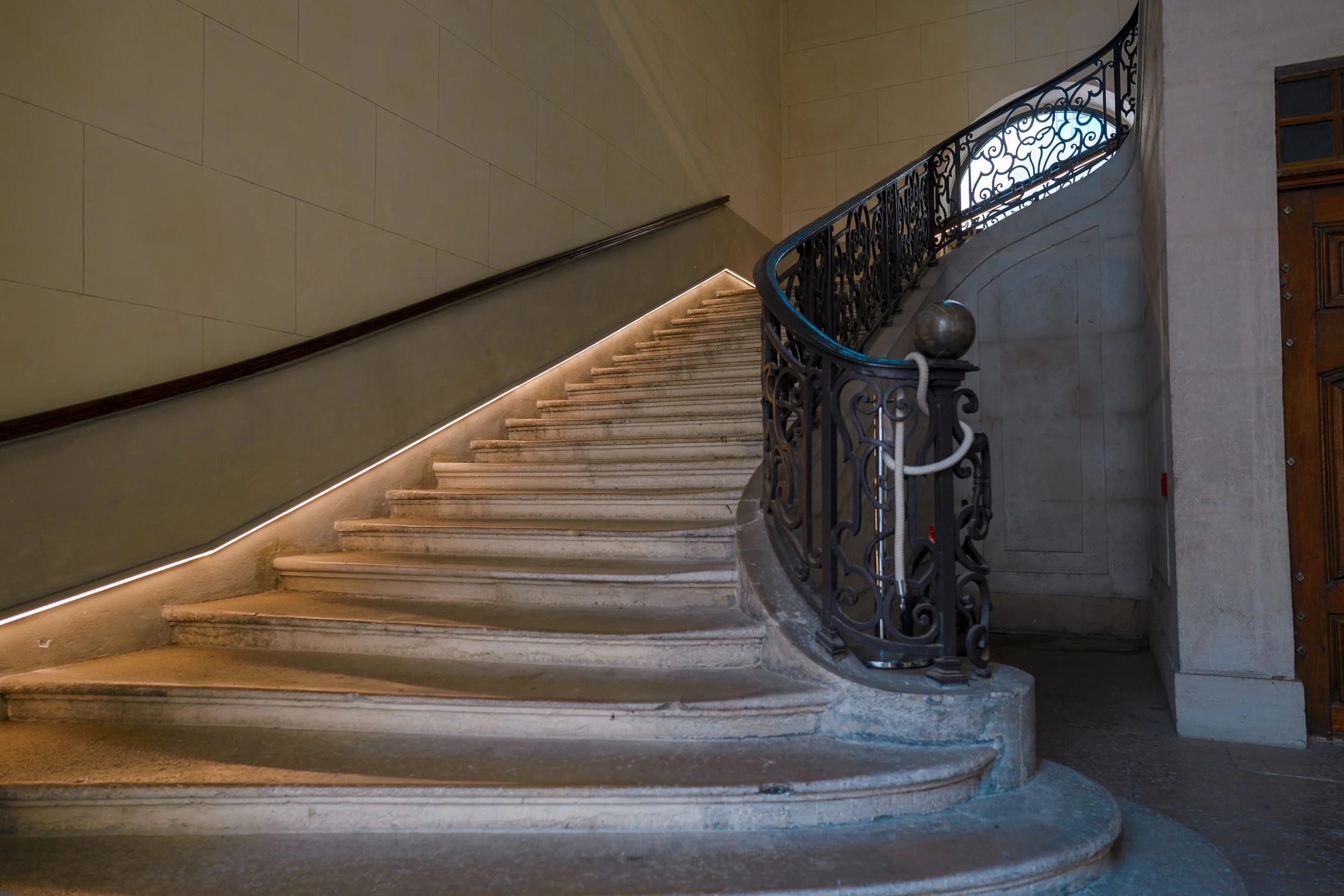
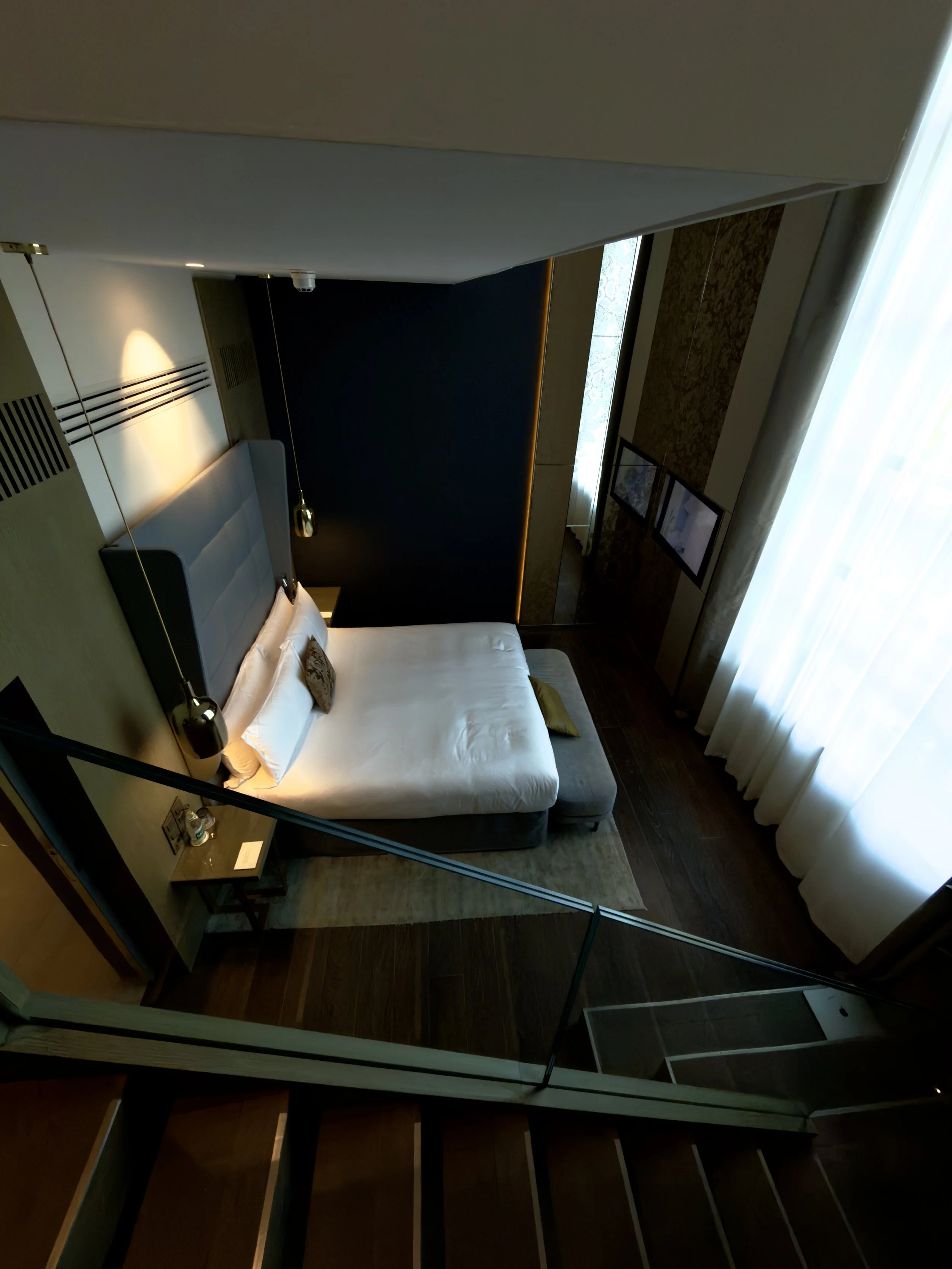
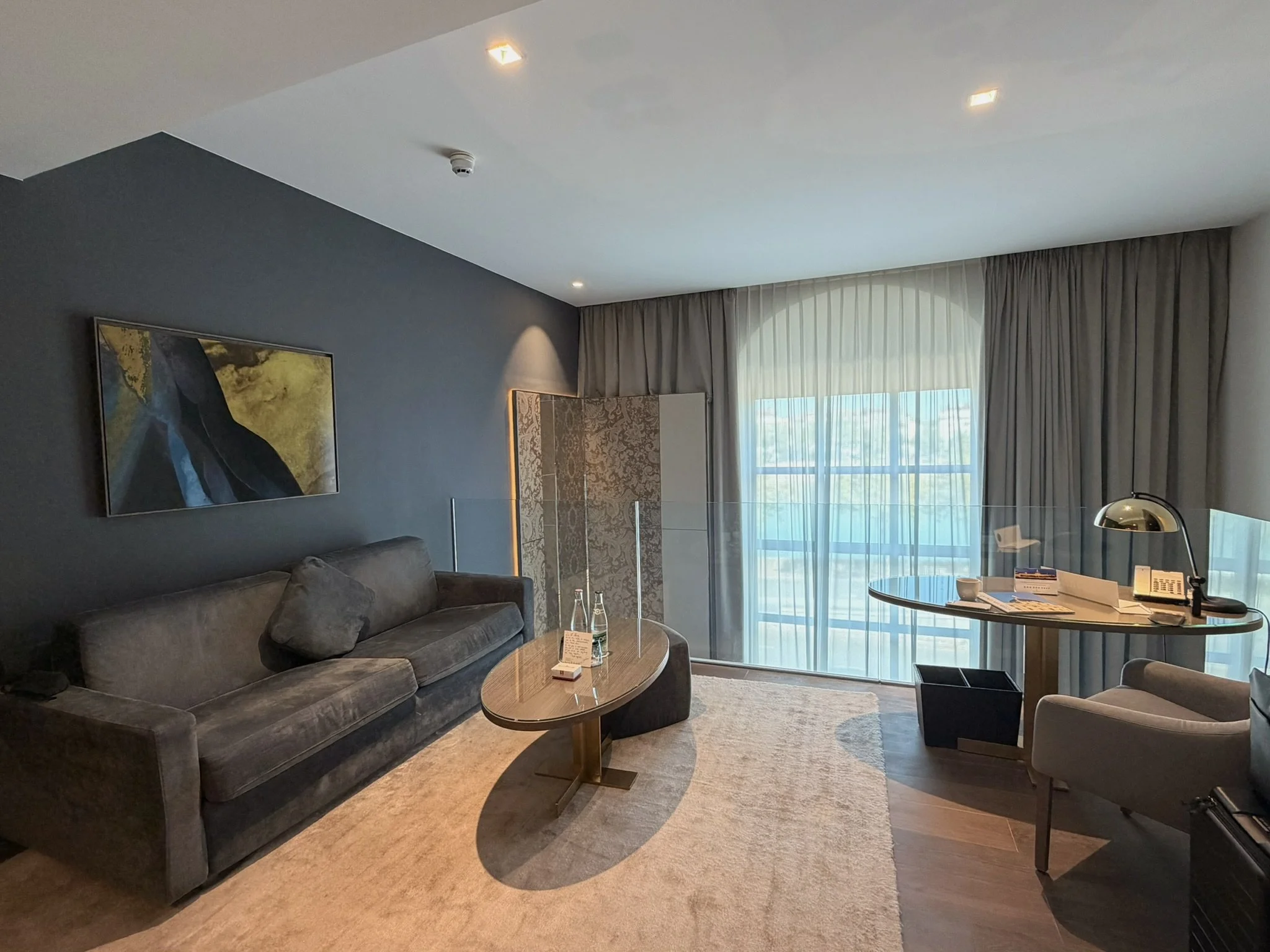
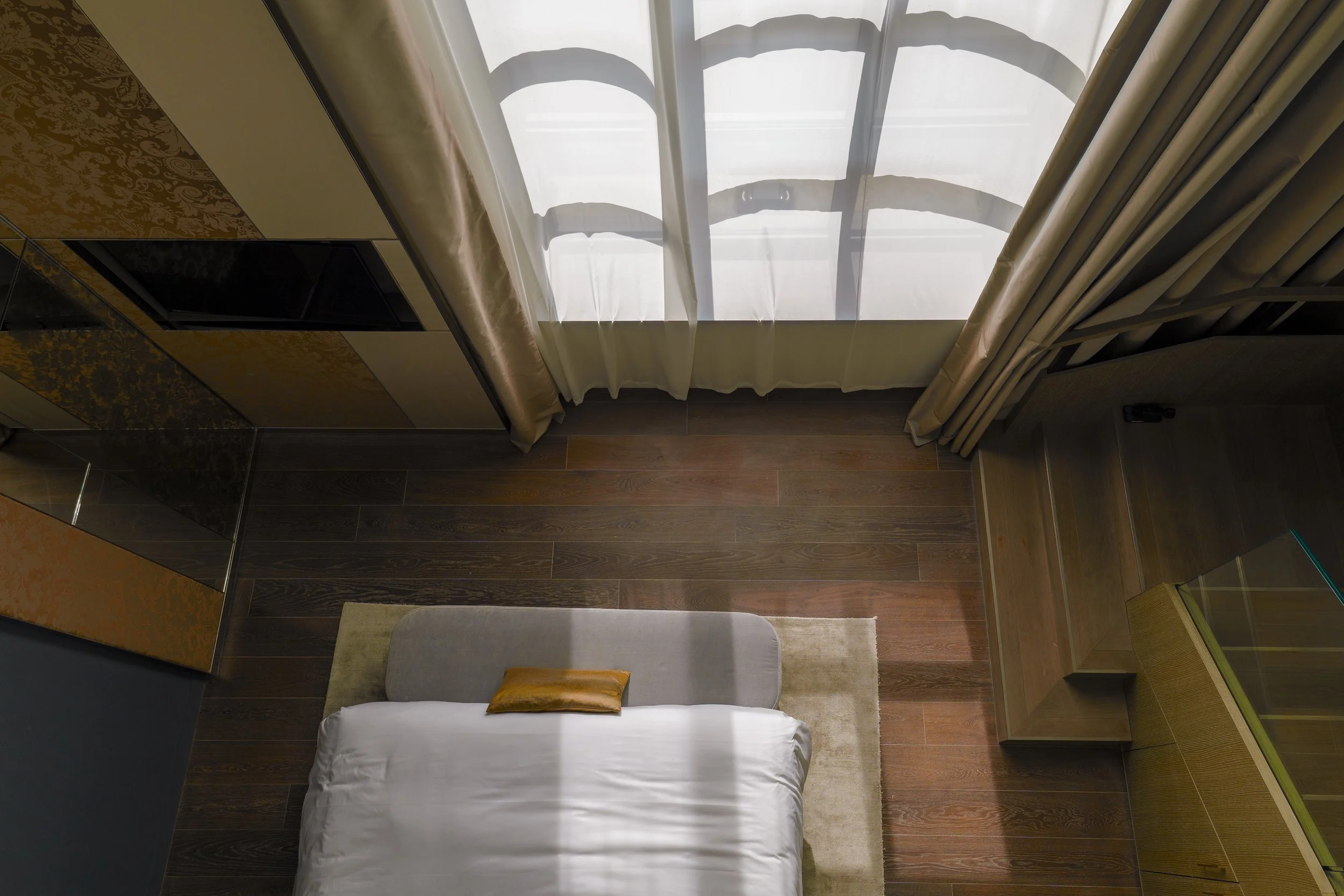
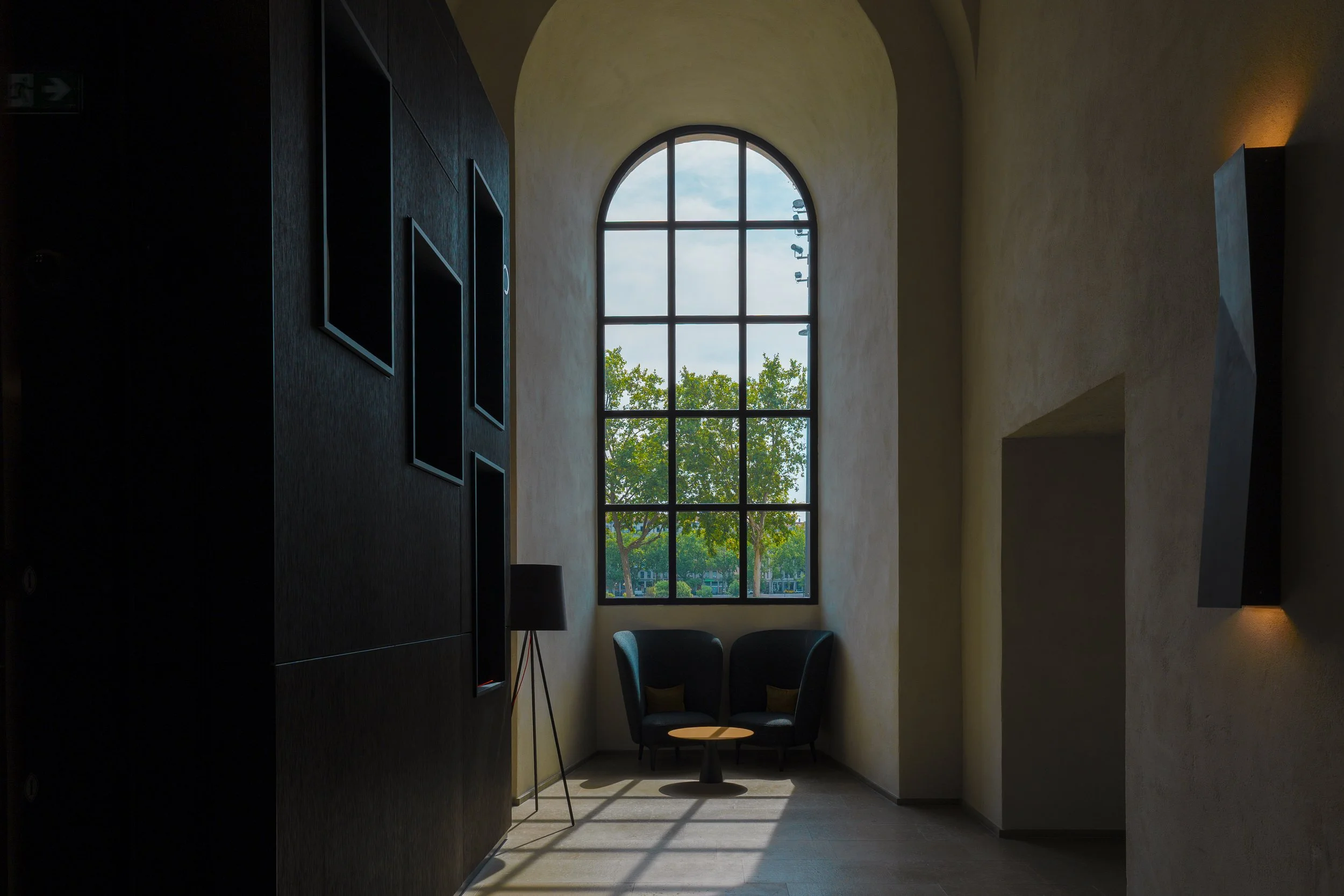
The duplex rooms preserve Soufflot’s windows at their full height, letting the architecture become part of the room rather than simply frame it. You sleep beneath them. A staircase rises to a quiet sitting room overlooking the bed below, the proportions still dictated by the original building.
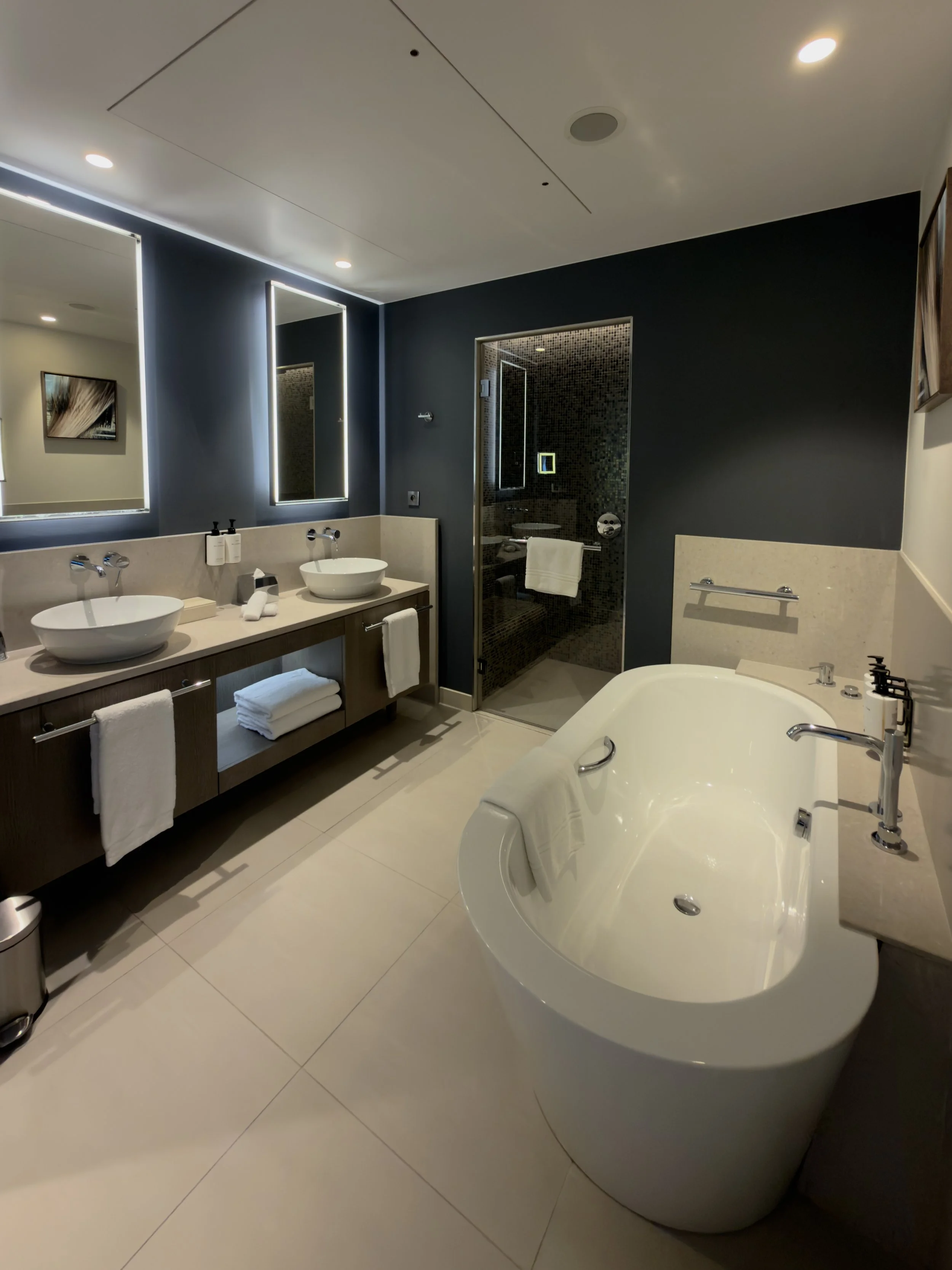
The bathroom is hushed. Stone, glass, soft light.
And beyond the windows, the Rhône.